The north star · October 2026
An AI that is yours.
ALINA is becoming an always-on intelligence personal to one human. It knows you, works across your machines in your name, and calls the strongest frontier models when a task needs them. Your memory, your authority and your identity live in an operating system you own. Models and agent apps are parts you can swap.
Loom ledger · liveShared memory · liveEngram · in researchALINA box · target
The inversion
Today you borrow a model's memory. Next, the model borrows yours.
Every assistant today is a frontier model with a memory feature bolted on, and that memory lives with the vendor. ALINA turns the arrangement over, one role at a time, and only when the new arrangement wins on evidence.
The model is the agent.
A frontier model runs the show. Your history is a tool it calls, stored in its vendor's app. Change apps and you start over.
Your model is the agent.
A personal model that already knows you holds the plan. Frontier models are tools it calls for heavy reasoning. Your memory stays in your OS whichever model is on duty.
Architecture
Hands, brains and a self.
The design splits a personal AI into three layers. The hands and brains are replaceable. The self is the part that is you, and it outlives both.
Every agent app, one mesh.
OpenClaw, Claude Code and Desktop, Codex, pi and Antigravity do the work. Loom joins them so any of them can see, follow and take over another's session. No single vendor's app is the hub.
Swappable, and earned.
Frontier models from several labs think for ALINA today. A personal model, Engram, joins as one more brain and takes over roles only as it beats them on your own work.
Memory, authority, identity.
What ALINA remembers, what it may do in your name, and who you are. Held by AlinaOS where you control it, with every action recorded.
The self layer
Three memories, the way people have them.
What happened, what is true, and who you are. Each one lives in its own system, and each one feeds the next while you sleep.
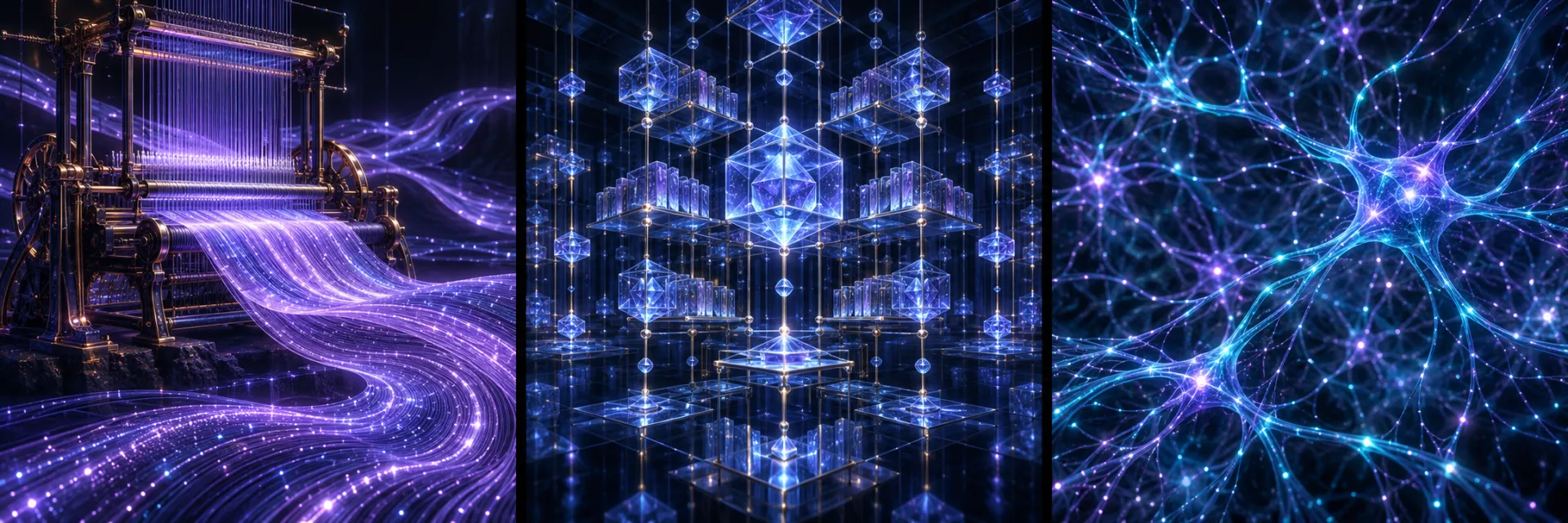
Loom
Every session in every agent app, in full, with where each piece came from and whether it can be trusted. More than 150,000 events across five harnesses so far.
Shared memory
Durable facts, decisions and lessons, distilled every night by a council of models from three labs. Every read and write is bound to an audience.
Engram
Habits, style and ways of working, held in the weights of a personal model. Encrypted, detachable, and rebuildable from the two memories beside it.
The sleep cycle
Every night, the day becomes part of who ALINA is.
Sessions
You and your agents work in whichever apps fit the task.
Loom
Every turn lands in one ledger with provenance and trust labels.
Memory council
Models from three labs propose, cross-examine and adopt what lasts.
Shared memory
Curated knowledge, partitioned by audience, which no curator can delete.
Consolidation
Engram learns from it into a personal adapter. Exact facts stay in retrieval.
Steps 01–04 run nightly today. Step 05 is in research.
Earned, never assumed
Promoted on your own work.
A personal model does not take over because it is new. It takes over a role when it beats frontier models plus retrieval on a benchmark built from your real sessions: what you decided, how you would approach a problem, how you would write it.
- Hybrid, permanently. Weights hold who you are and how you work. Retrieval holds exact facts. Research so far says retrieval is strong on facts and weak on forgetting, updates and time, which is exactly where weights help.
- A frontier fallback, always. Roles where personal knowledge matters come before roles where raw reasoning matters, and the conductor role keeps a frontier model behind it.
- No big-bang switch. ALINA keeps every capability it has today until a replacement proves itself.
Roles, in order
| Role | Promoted when |
|---|---|
| Memory oracle | It beats frontier plus retrieval at recalling, updating and forgetting what you know. |
| Voice | You prefer its drafts in a blind comparison. |
| Routine conductor | It escalates correctly on held-out tasks, with no worse outcomes at lower cost. |
| Conductor | A sustained record as routine conductor, with the frontier fallback kept. |
Your data, your rules
A model with your memory in it is the most sensitive thing you will own.
So the rules come first, not as a later hardening pass. Every thread and every memory carries a data class, and every action ALINA takes in your name has a written limit.
Data classes
| Class | May train your model |
|---|---|
| personal | yes Your own projects, preferences and desktop work. |
| client | never Work you do for someone else stays theirs. |
| export-controlled | never Regulated work is fenced off entirely. |
| research-open | no Published research has its own corpus. |
- Inside your systems first. ALINA reads what your account can read and changes your own machines, repositories and agents through reviewed paths.
- Outbound waits for you. Email, chat, posts and purchases are drafted by ALINA and sent only after you approve, from the desktop or your phone.
- Untrusted text stays data. Web pages, tool output and messages from other people are labelled at the source and never promoted to instructions.
- Every action has an author. Each one is in the ledger, so "who did this, from which session" always has an answer.
- Trust widens on evidence. One class of action at a time, after a record of approvals that needed no edits.
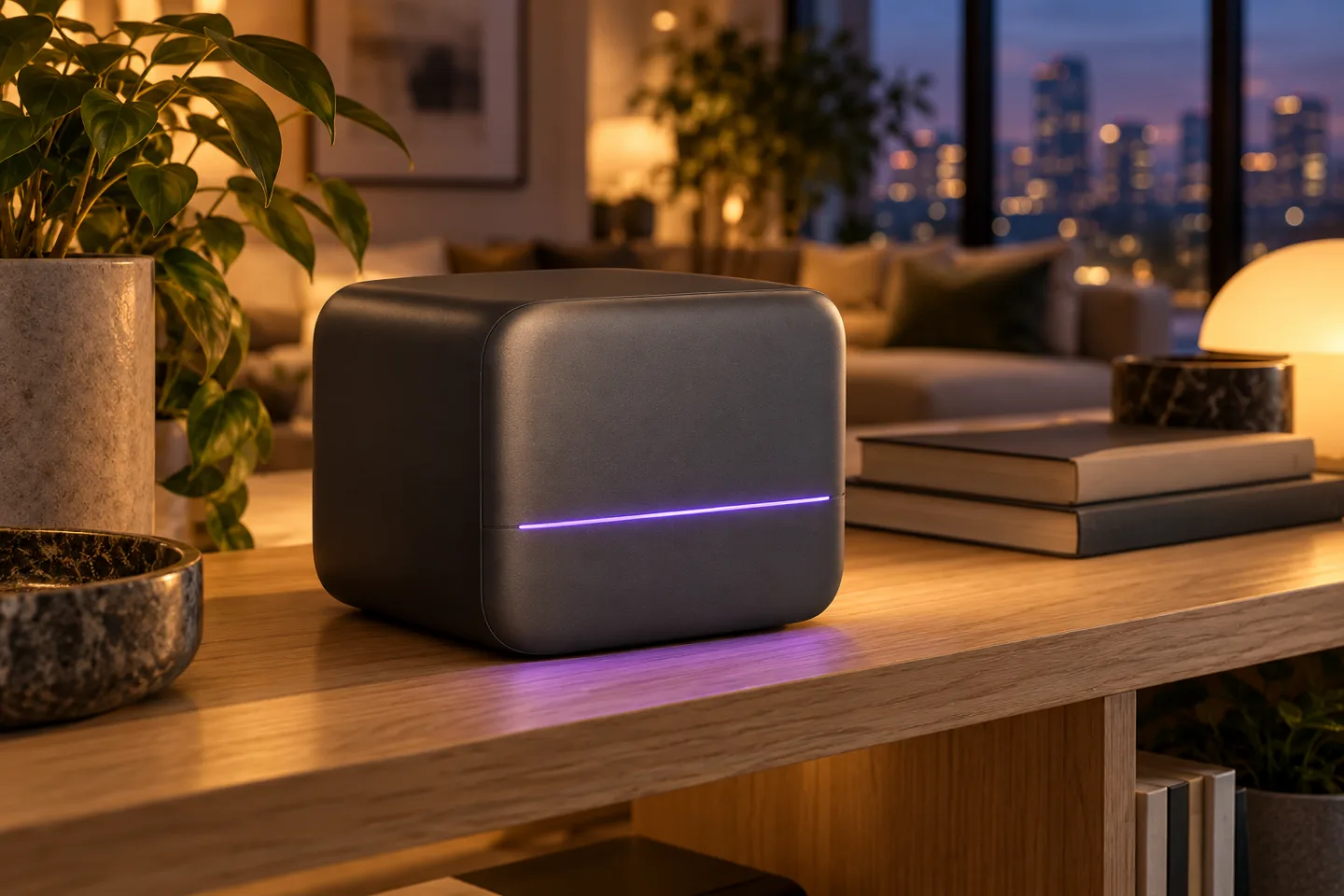
The product target
Your ALINA lives at home.
Each person gets their own ALINA box: a quiet NixOS machine running their agent apps, their ledger, their memory and their personal model, with their data under their roof. The cloud is used for training bursts, not for holding who you are.
- A build, not a copy. Everything is declared in Nix, so a second person's ALINA comes from the same flake with no hand edits, and isolation between people uses the same rules as isolation between data classes.
- Any model, any harness. No frontier lab will ship a system that works with every other lab's models and apps and keeps your memory at your house. That openness is the point.
- A product from day one. Every layer is designed per person today, even while ALINA runs for one.
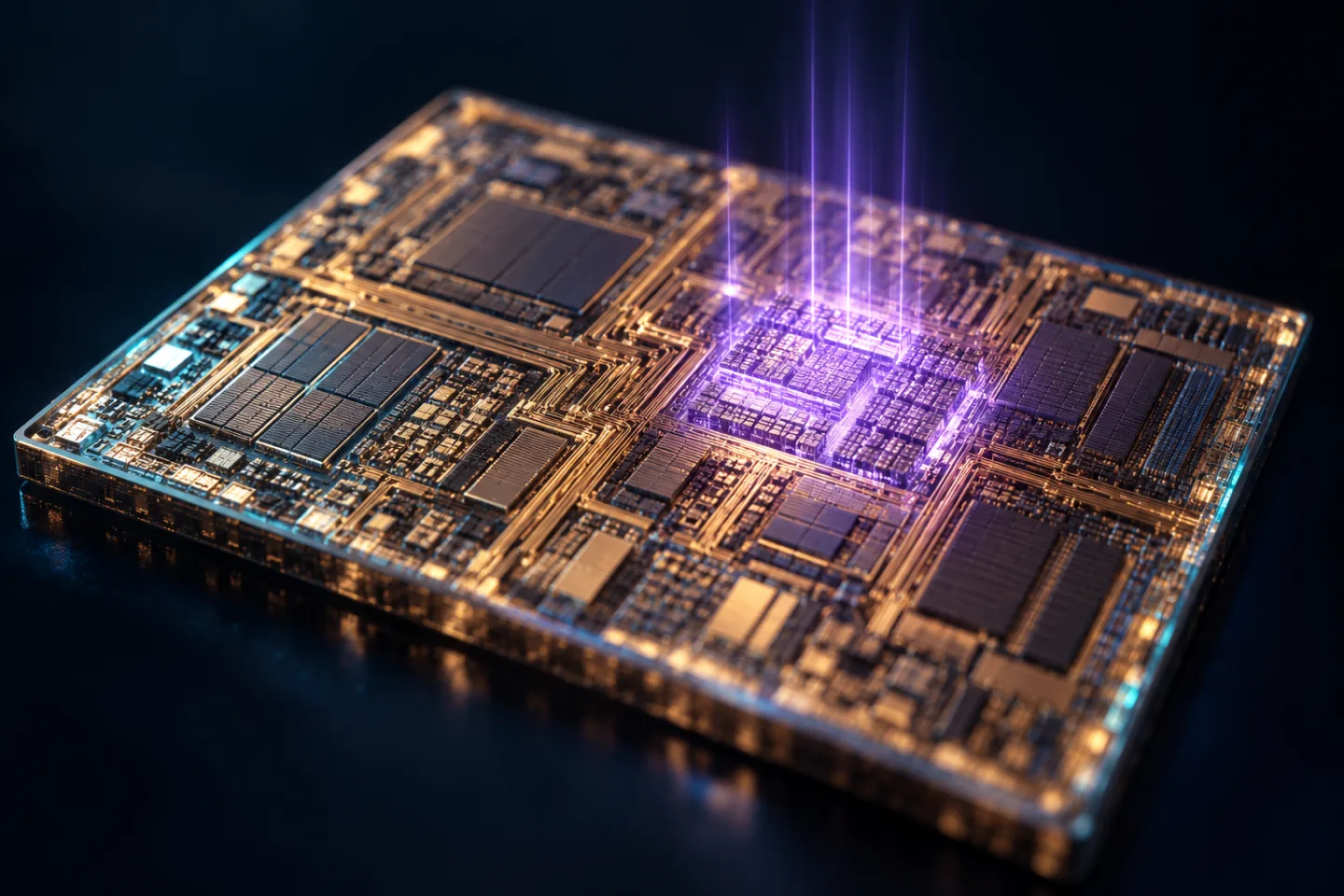
Long range · ControlStackAI Silicon
Down to the silicon.
A sister program works on agent-directed chip design: small RISC-V extensions and low-power, fixed-latency accelerators, taken from RTL to FPGA to silicon with every claim measured. It meets ALINA in three places, in order.
- ALINA designs the chips. Design, verify, measure, evolve is an agent workflow. It becomes ALINA's flagship workload, with the ledger as the evidence trail and a Nix flake pinning the toolchain so every result reproduces.
- A front end that never sleeps. A tiny always-on stage that watches the event stream and decides when to wake the large model, so an always-on AI costs almost nothing while it waits.
- Later, a memory unit. A personal model that writes its own weights while it thinks needs hardware no commodity chip was built for.
The road
Twelve rungs, each with a gate.
Nothing above a rung replaces anything until that rung's gate passes. The next three need no new hardware and change nothing ALINA does today.
Principles
How we decide.
Keep today's capability
Frontier models stay ALINA's brain until a replacement wins, one role at a time.
The OS owns the self
Memory, authority and identity outlive any model, harness or vendor.
Earn it on real work
Promotion is decided on the person's own sessions, not a synthetic benchmark.
Per person from day one
No layer may assume a single user.
Evidence over claims
Every component states what it was measured against.
Declarative and reproducible
If it can be Nix, it is Nix. A second ALINA is a build.
Nothing is off limits. Everything is earned.
ALINA OS already runs every day as a working system. This is where it goes next. Follow the build, read the research, or talk to us about it.